Sunday, 7 April 2013

A Touch of the Med!


I wanted to avoid using the phrase "spring is here," as firstly I suspect that it has become somewhat overused recently and secondly because the weather has been so unpredictable of late! When we met in the car park at Frampton at 7am today, the car thermometer was reading -3.5°C and there was frost on the ground, but without the biting easterlies it felt very pleasant indeed. By mid morning, it was (I hate to say it) positively spring-like! With the weather being somewhat improved, there was hope that the first migrants of the year might have arrived. There was a lovely Mediterranean Gull in full summer plumage on the islands in the reedbed, being hassled by a few of the hundreds of Black-headed Gulls that have decided to make Frampton their home this year.

Mediterranean Gull, Larus melanocephalus and Black-Head Gull, Croicocephlus ridibundus

Mediterranean Gull, Larus melanocephalus and Black-Head Gull, Croicocephlus ridibundus

Migrants were solely represented by this lovely pair of Little Ringed Plovers. In the last few weeks these tiny birds will have crossed the Sahara Desert, travelling from tropical Africa to their breeding grounds somewhere in Europe. Hopefully there are a pair or two aiming for Frampton as their final destination this year! This photo shows nicely the two key ID features to look for when separating these birds from the Closely related Ringed Plover; the bright yellow eye ring and all-black beak!

Little Ringed Plover, Charadrius dubius

Also around the reserve were a good selection of raptors; Merlin, Sparrowhawk, Peregrine and Marsh Harrier were all causing havoc among the waders and wildfowl. The Little Owl was in the dead stump by his usual hang-out, there was a record count of 120 Avocet, at least a dozen Ruff and a very smart Black Brant associating with the Brent Geese.

Tuesday, 2 April 2013

A Weekend on the Wash


I'm willing to bet that there weren't many other people that spent their Easter weekend thigh deep in freezing cold water catching waders... If there were, I think we would get on very well! As the group convened on Friday evening to plan the weekend ahead, despite the cold there was a sense of optimism as c3000 Knot had been seen on Snettisham beach that morning around the area we would be catching in! They were also there at 4.30am the next morning as we gathered in the dark on the beach to wait for the tide to bring the birds in. As the sun rose, the snow began to fall and a Barn Owl appeared and hunted within 100m of me for around 20 minutes, one of those "moments." Alas, the Knot weren't so obliging  and just as the tide was about to put them into the catching zone, they suddenly took flight and headed to Snettisham Pitts. However, left behind were 60 Oystercatchers, some Common Gull and a Few Bar-tailed Godwits, all of which were caught successfully. This first photo is of me and my first Oystercatcher in the hand, what a lovely pair!!?


After catching up on some much needed sleep, we spent the following two nights mist netting at two different salt marshes around the southern area of the Wash. This time the catch included Dunlin, Knot, this lovely Summer Plumage Redshank and some more Bar-tailed Godwits.

Common Redshank, Tringa totanus

The Bar-tailed Godwit can present a bit of challenge when being separated from the similar Black-tailed Godwit, especially in winter. The following photo show off a reliable technique in separating the two species; bill shape. The Barwit has an ever-so-slightly upturned beak, whereas the Blackwit shows a very straight bill. When on the deck, Barwits also look dumpier and a lot less graceful when moving around as the "knee" joint is much higher up the leg. If close views are not possible, the Barwit shows pale fringes and dark centers to the feathers on the upperparts, whereas the Blackwit has a more uniformly greyish appearance to its upperparts . Another useful identification point (the clincher if you will) is the absence of the obvious white wing bar that Blackwits show in flight. In summer, the Barwits orange breeding plumage extends almost over the entire belly, whereas the Blackwits is restricted to its chest, making ID pretty simple. The second photo below also shows the big difference in size between male and female Barwits, the smaller male being in the foreground.

Bar-tailed Godwit, Limosa lapponica


Bar-tailed Godwit, Limosa lapponica

Sunday morning was glorious and we spent some time doing colour resightings on Holme beach, where we found a mere three colour ringed Sanderling. These sort of sighting are vital for the research that the Wash Wader Ringing Group and many others carry out, so reports of any birds, dead or alive are always encouraged. 


I returned home about 1am on Monday morning, and awoke (mid-afternoon) to find this Whooper Swan in the field opposite my house. The bird has apparently been around all weekend, and we will be keeping a close eye on it over the next few days.

Whooper Swan, Cygnus cygnus


Monday, 1 April 2013

Easter Sun


After my bank holiday weekend got off to the perfect start (an extended lay in) I decided to spend a few hours our on the reserve in the sunshine. It was lovely to be able to bird and not feel like my face was being slowly worn away by the biting easterlies that have been present for the last week or so. There wasn't anything new to report, as the weather appears to have put an almost complete halt to migration, and there is a sense that everything is now waiting eagerly to burst into action, whether it be breeding or migrating. Present in good numbers still are Ruff, with this individual showing particularly well from the 360 hide.

Ruff, Philomacus pugnax

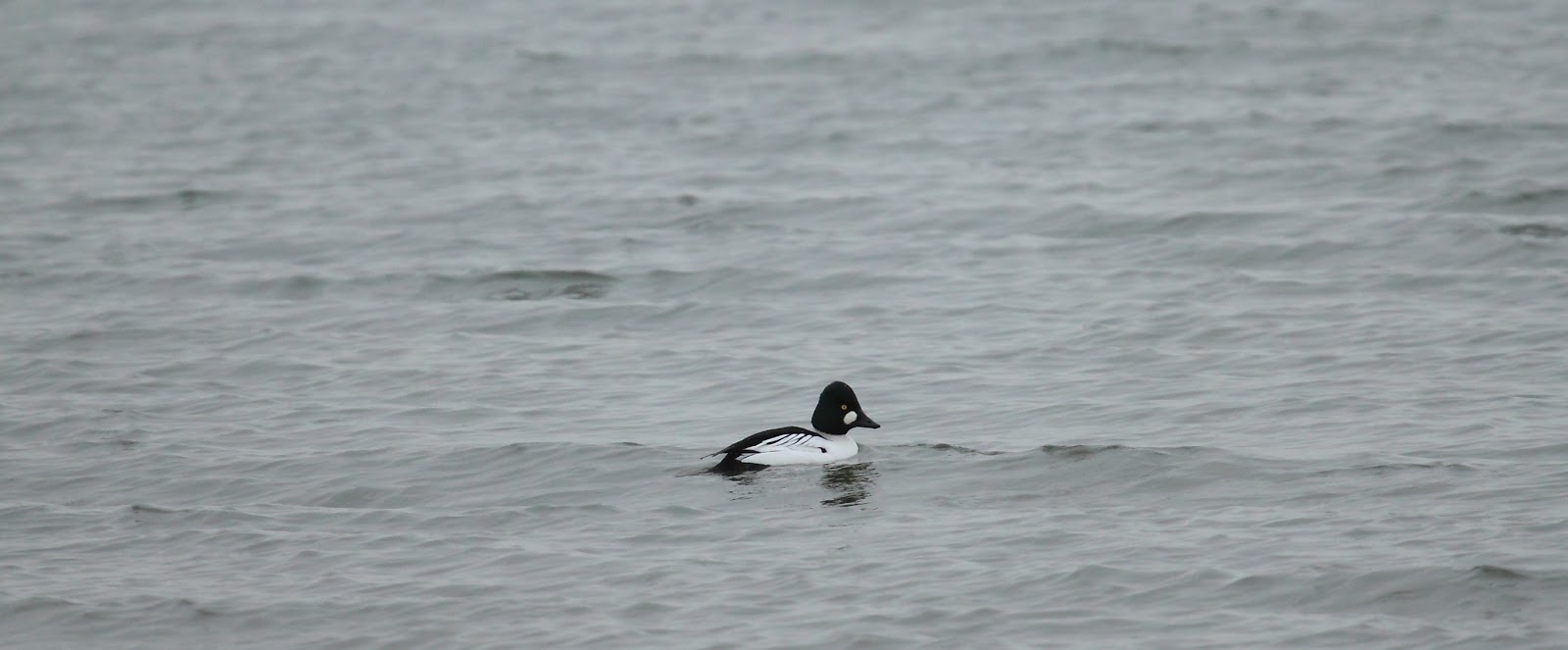
The Ruff  is now red-listed in Britain due to the decline in the breeding population. This bird (likely a male, as females very rarely winter in Britain) will soon be returning to its breeding grounds in Northern Europe and Asia to begin lekking. Also around the reserve, Wigeon and Brent Geese are still numbering in the hundreds, and Teal, Goldeneye and Pintail remain.
There are a few species however, that are starting to swing into action so to speak. I spent 20 minutes on the sea wall looking over the salt marsh, hoping for a few raptors to drop in, alas there was no sign. 3 Knot, a Black-tailed Godwit and ten or so noisy Redshank kept me company. The lapwing are also displaying over the wet grasslands and scrapes, but by far the noisiest birds on the reserve at the moment are the Black-Headed Gulls, which are all competing for what little of the islands are visible above the water at the moment.  I spent about half an hour watching these sociable and rather underrated birds scrapping in the sunshine, with some having already chosen and won a suitable site. What separates one spot of gravel from the next is a mystery to me!


Black-headed Gull, Chroicocephalus ridibundus 


Black-headed Gull, Chroicocephalus ridibundus 

Black-headed Gull, Chroicocephalus ridibundus 


As I headed back home to get ready for a weekend with the Wader Wash Ringing Group, the wind started to pick up again and i spared a thought for all those seabirds that tragically didn't make it back to the East Coast this year to breed. Lets hope that the damage to the population isn't too severe! 

Sunday, 24 March 2013

Off to a Flyer!


No pun intended there. So my first week at the new patch, Frampton Marsh and Freiston Shore, where I will be based for the next 6 months with the RSPB. With biting easterlies and snow on the ground outside as I write this, I am thinking it may well be a silly idea to see if anything has been blown in onto the reserve. However, my patch list already tops 70 birds with plenty of waders and ducks present, but the real highlight of my first week has been a drake LESSER SCAUP. Originally located at the start of the week, it was quickly lost, but re-appeared on Friday showing at Freiston down to 30 metres.
This is a lifer for me and a cracking start to spring migration. I have a few record shots showing the key features to look for. The first photo the bird is with three Tufted Duck, a great comparison bird. Greater Scaup are slightly larger than Tufties, and this bird is slightly smaller and daintier. It also shows nicely the head shape. On Lesser Scaup, the forehead is steeped and the peak of the crown tends to be towards the back of the head giving it an oval appearance (similar to the Tufties), whereas the Greater Scaup has a much more smooth, rounded head. While these features can vary greatly with the activity of the bird, it was also observed while resting and still showed the same features.


Lesser Scaup, Aythya affinis with Tufted Duck, Aythya fuligula

The second photo just about shows the features of the bill, another useful way to separate male Scaups during the breading season. On Lesser Scaup, the bill is slighter and the black tip is narrower and can often be confined to the nail on the tip of the bill. The final clincher for this bird was the white that shows on the primary and secondary feathers. The Greater Scaup show extensive white on the wing which reaches almost to the tip, whereas the Lesser Scaup shows white only half way down the wing before it fades into brownish-grey.

Lesser Scaup, Aythya affinis with Tufted Duck, Aythya fuligula

After some deliberation, time to wrap up and head out I think!

Monday, 28 January 2013

Brief Update from the Weekend


Saturday I was back ringing at The Mumbles, and most of the morning consisted of having my rather cold hands nibbled by Blue Tits which were about in large numbers. There were also plenty of Goldfinch, Greenfinch and Reed Buntings around as well, but the highlight for me was my first Water Rail in the hand, this splendid female. Generally easier to see in winter due to the influx from the continent, these birds are still secretive and tough to spot, so to get one in the hand was lovely.

Water Rail, Rallus aquaticus

Then, on Sunday, a quick afternoon outing proved successful when we were afforded good views of the regular Bewick's Swans at Burpham and great views of three of the Bearded Tits that have been wintering by the Long Pool at Pagham Harbour.


Sunday, 27 January 2013

The Yearly Pilgrimage!


So, the yearly trip East to Dungeness was undertaken on Friday, with great success and no disruption from bad weather! Starting off on the beach by the fishing boats, there were c10 of both Gannet and Kittiwake feeding close in-shore, giving fantastic views. They were also in the company of 100+ auks, split evenly between Razorbill and Guillemot, with equal number passing by in the 10 minutes we spent watching. There was also a passage of around 40 Red-Throated Divers, and the Glaucous Gull was present as usual.

 Glaucous Gull, Larus hyperboreus with Herrings, Larus argentatus and a single Great Black-backed Gull, Larus marinus

Northern Gannet, Morus bassanus

Then onto the ARC pit, where the water level was very high, much like the rest of the reserve. On the walk down the Tree Sparrows could be heard from across the road and a few Fieldfare and Redwing were present, as was a singing Cetti's warbler in the reedbed. From the hide, we were afforded great views of a male and female Goldeneye, and a Kingfisher put in a flyby.

Goldeneye, Bucephala clangula

Onto the main reserve, and there were hundreds of Fieldfare with Redwing and Song Thrush mixed in. On the drive down, a Peregrine was plucking a Wigeon while being hassled by two Marsh Harriers and some Crows and 8 Barnacle Geese were grazing in a field. From the Dennis hide, the first of 3 Great Egrets of the day flew past, and a stunning Male Smew landed in front of us with a female and spent a few minutes swimming around before flying off again. On New Diggings, another Marsh Harrier spent a good 5 minutes attempting to catch itself a Coot, and nearly succeeded before eventually giving up. Around the rest of the reserve, there were Lapwing, Teal, Tufted Duck, Wigeon, Gadwall and Shoveler in good numbers. There were also singles of Grey Plover, Chiffchaff, Skylark, Little Grebe and Woodcock and two more Great Egret.

Great Egret, Ardea alba

Chiffchaff, Phylloscopus collybita

After half an hour warming up in the car/eating lunch we moved onto Rye Harbour where a chilly walk produced lots of Oystercatcher, Dunlin, Grey Plover, Turnstone, Teal and Sanderling, a single Black-tailed Godwit and an Avocet that was feeding on the wader pool.


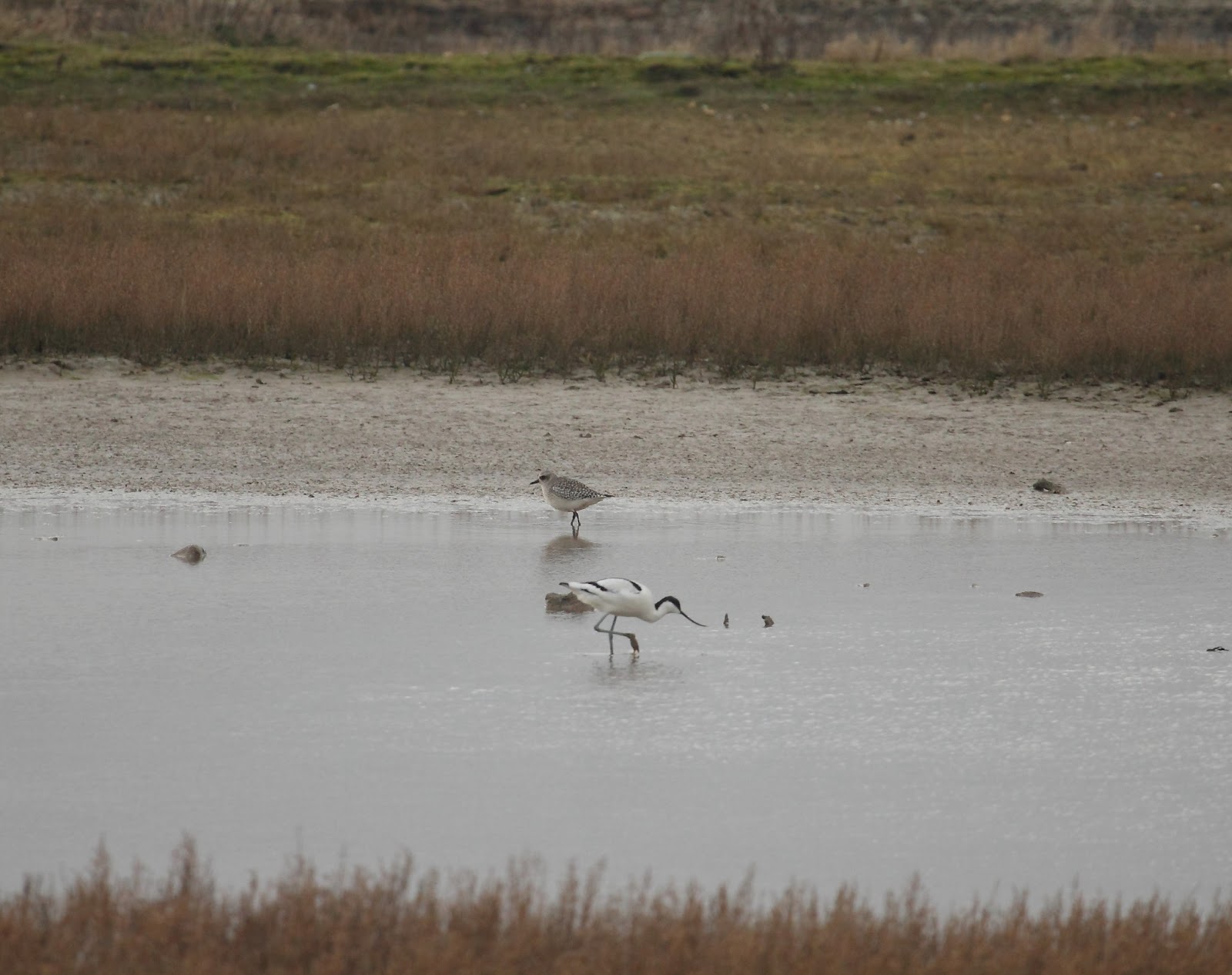
Avocet, Recurvirostra avosetta and Grey Plover, Pluvialis squatarola

 On Flat Beach there was a lovely Spotted Redshank which gave close views while feeding around some sleeping Snipe. There was also a surprise sighting on the beach in the form of a lone Grey Seal which seemed very happy resting amongst some gulls. On the return walk around 70 Curlew flew over and landed in the marshy area of the reserve.

Spotted Redshank, Tringa erythropus

Grey Seal, Halichoerus grypus
On the way back and in seriously fading light, we stopped at Pett Levels briefly where a large flock of Canada Geese had been joined but roughly 15 White-fronted Geese and a single Bar-headed Goose, taking the species total for the day to a relatively impressive 73!

Sunday, 20 January 2013

Birding in the Snow!


So, after the roads had been cleared of snow after Fridays "blizzards??" it seemed only sensible to get out and do some birding in the snow, and make the most of the countryside looking truly magical. First stop was Warnham LNR where the feeders didn't let us down. Great numbers of Siskin and Redpoll were present, joined by numerous Goldfinch, Reed Bunting, Long-tailed Tit, and the other usual suspects. Around the rest of the reserve it was pretty quiet; a few Pochard out on the almost entirely frozen lake and the usual gull flock, with all 5 common species present.

Siskin, Carduelis spinus

Lesser Redpoll, Carduelis cabaret

Lesser Redpoll, Carduelis cabaret

Then it was on to Pulborough, where it was rather quiet as the brooks were almost entirely frozen. There were a lovely flock of Goldcrests pinging about in the trees at Fattengates, accompanied by at least 1 Firecrest! There were also plenty of Song Thrush on show, plenty of Lapwing around and out on the brooks there were a few Teal, Shelduck and Widgeon. The highlight for me was the 34 Snipe counted from West Mead Hide, pottering around in the snow, almost like they were still totally camouflaged. Back at the visitor centre, there were numerous Coal Tit on the feeders, and a single Marsh Tit.

Common Snipe in the snow,  Gallinago gallinago

A chilly looking Lapwing, Vanellus vanellus